Real Estate CRM Buyer's Guide: Features That Actually Close Deals
Most real estate CRMs are bloated address books. This buyer's guide covers the features that genuinely move deals forward — lead capture, follow-up automation, pipeline visibility, and AI outreach.
Every agent has heard the pitch: "This CRM will transform your business." Then they import their contacts, use it as a glorified address book for a month, and quietly go back to their phone and memory. The problem usually isn't the agent — it's that most real estate CRMs are built around storing data instead of moving deals.
This buyer's guide focuses on the features that actually close deals, so you can tell the difference between software that works and software that just sits there.
Start with the one metric that matters: follow-up
In real estate, deals don't usually die from a dramatic "no." They die from silence — a lead that never got a second touch, a buyer who drifted because no one followed up after the viewing. Study after study points to the same thing: speed and consistency of follow-up are the biggest predictors of conversion.
So the first question to ask any CRM isn't "can it store my contacts?" — every tool can. It's "will it make sure the right follow-up happens at the right time, without me remembering?" Everything below ladders up to that.
The features that actually close deals
1. Frictionless lead capture from every source
Leads come from portals, your website, social, referrals, and walk-ins. If capturing them is manual, some never make it into the system — and an uncaptured lead is a lost lead. Look for automatic capture that pulls every source into one inbox the moment a lead appears.
2. Automated, timely follow-up
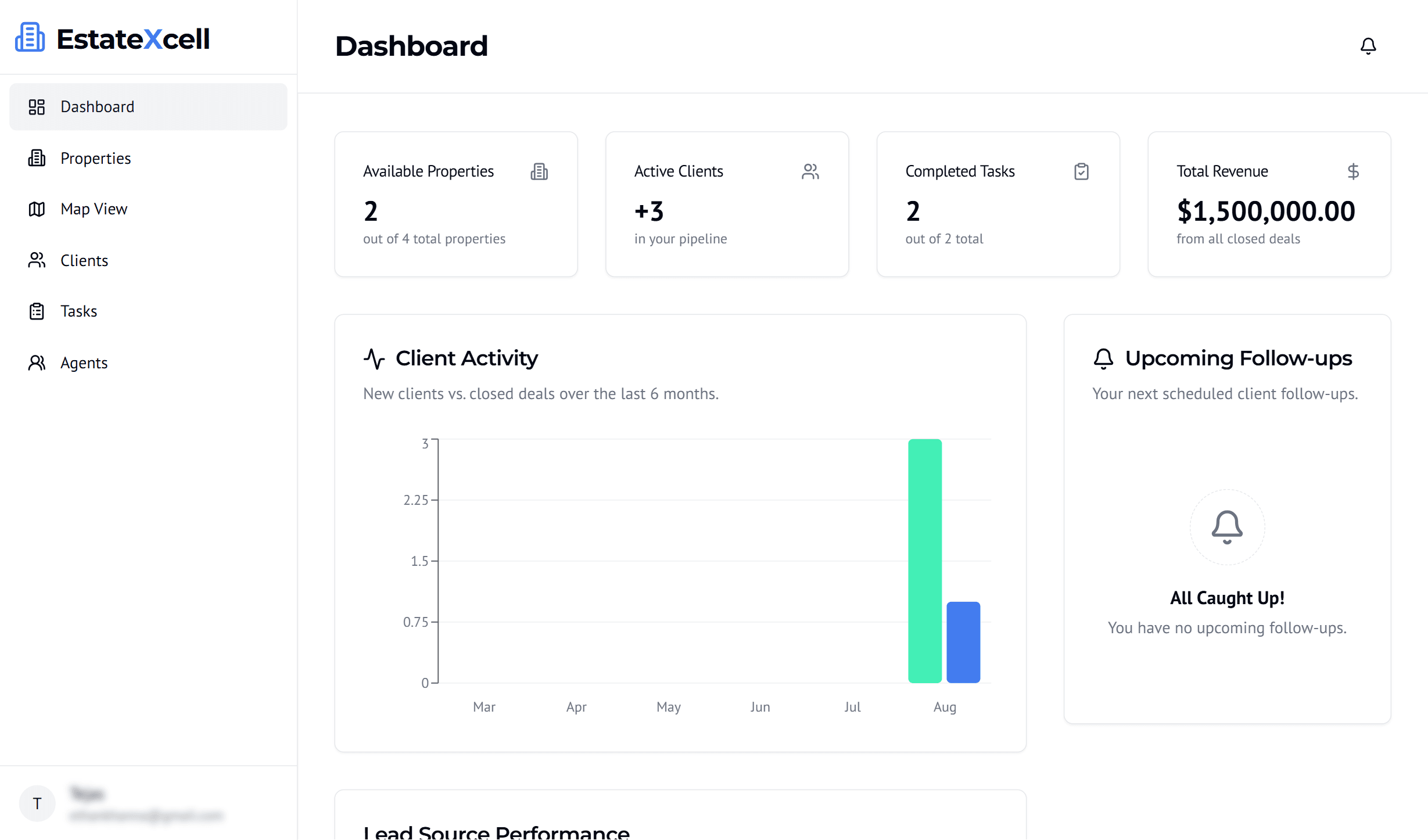
This is the engine. The CRM should trigger follow-up sequences, remind you (or act for you) at the right intervals, and escalate hot leads. A platform like EstateXcell is built around exactly this — lead management with AI-powered outreach so prospects get a timely, relevant touch instead of falling into a black hole.
3. A pipeline you can actually see
You should be able to glance at your pipeline and instantly know which deals need attention today. Clear stages, aging indicators, and next-action prompts turn a vague list of contacts into a prioritized plan.
4. Property–client matching
Real estate is unique: you're matching people to properties. A CRM that understands listings can surface the right property for the right buyer automatically — a generic sales tool can't.
5. AI-assisted outreach
The newest and most useful layer. AI can draft personalized messages, suggest the next best action, and keep outreach consistent even when you're slammed — so a busy week doesn't mean a silent week for your leads.
6. Reporting that informs decisions
Insight into lead sources, conversion rates, and agent performance tells you where to spend money and time. This supports the deal-movers above rather than replacing them.
What you can safely ignore (at first)
Vendors love feature checklists. Don't be seduced by:
- Endless customization you'll never configure.
- Dozens of integrations for tools you don't use.
- Vanity dashboards that look impressive but don't change what you do tomorrow.
Buy for follow-up and pipeline clarity first. Everything else is secondary.
Solo agent or agency — who needs this?
A common myth is that CRMs are for big teams. In practice, solo agents benefit enormously, because no single person can reliably hand-track follow-up across dozens of active leads. For agencies, the added value is visibility — seeing every agent's pipeline and making sure no lead is neglected because someone got busy or left.
One CRM we hear described as a turning point did something simple but powerful: it empowered realtors to manage leads effortlessly, strengthen client connections, and close deals faster — by making follow-up automatic instead of heroic.
How to choose without the overwhelm
- Write down your real workflow. Where do leads come from, and where do they currently get dropped?
- Score tools on follow-up first. Does it capture every lead and ensure timely, automated follow-up?
- Check pipeline clarity. Can you see today's priorities in five seconds?
- Run a two-week trial with real leads — not a demo with fake data.
- Then look at the extras. Reporting, integrations, customization round it out.
The bottom line
A real estate CRM earns its keep when it stops leads from going cold and shows you exactly which deals to push today. Prioritize lead capture, automated follow-up, pipeline visibility, property matching, and AI outreach — and treat everything else as a bonus.
If you'd like to see a CRM built around those deal-movers, take a tour of EstateXcell or book a demo.
Frequently asked questions
- What is a real estate CRM?
- A real estate CRM is software that centralizes your leads, clients, properties, and follow-ups so nothing slips through the cracks. The good ones don't just store contacts — they actively prompt the next action, automate follow-up, and show you which deals need attention today.
- What features actually help close more deals?
- Fast lead capture from every source, automated and timely follow-up, a clear pipeline view, property–client matching, and AI-assisted outreach. Reporting and a tidy contact database matter too, but they support those core deal-movers rather than replacing them.
- Do solo agents need a CRM or is it only for agencies?
- Solo agents arguably need one more. A single agent can't manually remember to follow up with dozens of leads at the right moment — that's precisely the work a CRM automates, and missed follow-up is the number-one reason deals quietly die.
- How is a real estate CRM different from a generic CRM?
- A real estate CRM understands properties, listings, viewings, and the buyer/seller lifecycle out of the box, so you spend time selling instead of bending a generic sales tool to fit how property actually works.
Ready to launch fast and scale smart?
Kaelix Technologies builds rapid, AI-powered software for growing businesses. Tell us your workflow and we'll show you what's possible.