FEFO vs FIFO Inventory: Which Method Should Your Factory Use?
FEFO and FIFO sound similar but protect against very different risks. Here's a clear comparison, when to use each, and how to automate FEFO so expiry wastage stops eating your margin.

Ask two factory managers how they rotate stock and you'll often hear the same two acronyms: FIFO and FEFO. They sound interchangeable, and a lot of the time they produce the same result. But the moment they don't agree is usually the moment a batch quietly expires on the shelf — and your margin goes with it.
This article breaks down FEFO vs FIFO, when each method is the right call, and how to automate FEFO so expiry wastage stops being a recurring line item.
The two methods in one minute
- FIFO — First-In-First-Out. Issue the oldest stock first, based on the date it arrived. Simple, intuitive, and the default almost everywhere.
- FEFO — First-Expired-First-Out. Issue the stock with the nearest expiry date first, regardless of when it arrived.
When every batch expires in the order it was received, FIFO and FEFO are identical. The difference appears when a newer batch expires sooner than an older one — for example, because it was stored differently, came from a different supplier, or simply had a shorter shelf life. FIFO would still send out the older batch and leave the soon-to-expire one sitting in the rack. FEFO catches it.
A quick worked example
Imagine you receive two batches of the same raw material:
| Batch | Received | Expires |
|---|---|---|
| A | Jan 3 | Aug 30 |
| B | Jan 18 | Jun 15 |
FIFO issues Batch A first, because it arrived first — and Batch B expires in June while it's still in storage. FEFO issues Batch B first, because it expires first, and you use it while it's still good. Same warehouse, same week, completely different outcome.
When FIFO is enough
FIFO isn't wrong — it's just narrower. It's a perfectly good fit when:
- Your materials don't carry expiry dates (metals, hardware, most durable components).
- Shelf life is so long it's effectively irrelevant.
- You want the simplest possible rotation rule and the expiry risk is genuinely zero.
For a machine shop turning steel and fasteners, FIFO is all the discipline you need.
When you need FEFO
FEFO becomes essential the moment expiry is a real risk:
- Food and beverage — ingredients and finished goods with best-before dates.
- Pharmaceuticals and cosmetics — strict, regulated expiry handling.
- Chemicals and specialty materials — where potency or safety degrades over time.
In these industries, FIFO alone will systematically leave your shortest-dated stock behind. FEFO is what keeps write-offs down and keeps you compliant.
The catch: FEFO needs batch traceability
Here's the honest part — you can't run FEFO on a system that only tracks quantities. To issue the nearest-expiry batch first, you have to know which batch is which, and that requires true batch-level traceability: every receipt tagged with its batch and expiry, every issue drawing from a specific batch, and a ledger that records each movement.
This is exactly why FEFO is hard to do on a spreadsheet and easy to do on a proper platform. (If you're still weighing whether you need a dedicated system at all, start with What is factory management software?.)
How to automate FEFO
With ledger-based, batch-aware inventory in place, FEFO stops being a manual chore:
- Tag every batch on receipt with its batch number and expiry date.
- Let the system recommend the issue order — nearest expiry first — whenever material is pulled for production.
- Turn on expiry alerts so you're warned before stock crosses the line, not after.
- Review the wastage report to see expiry losses trending toward zero.
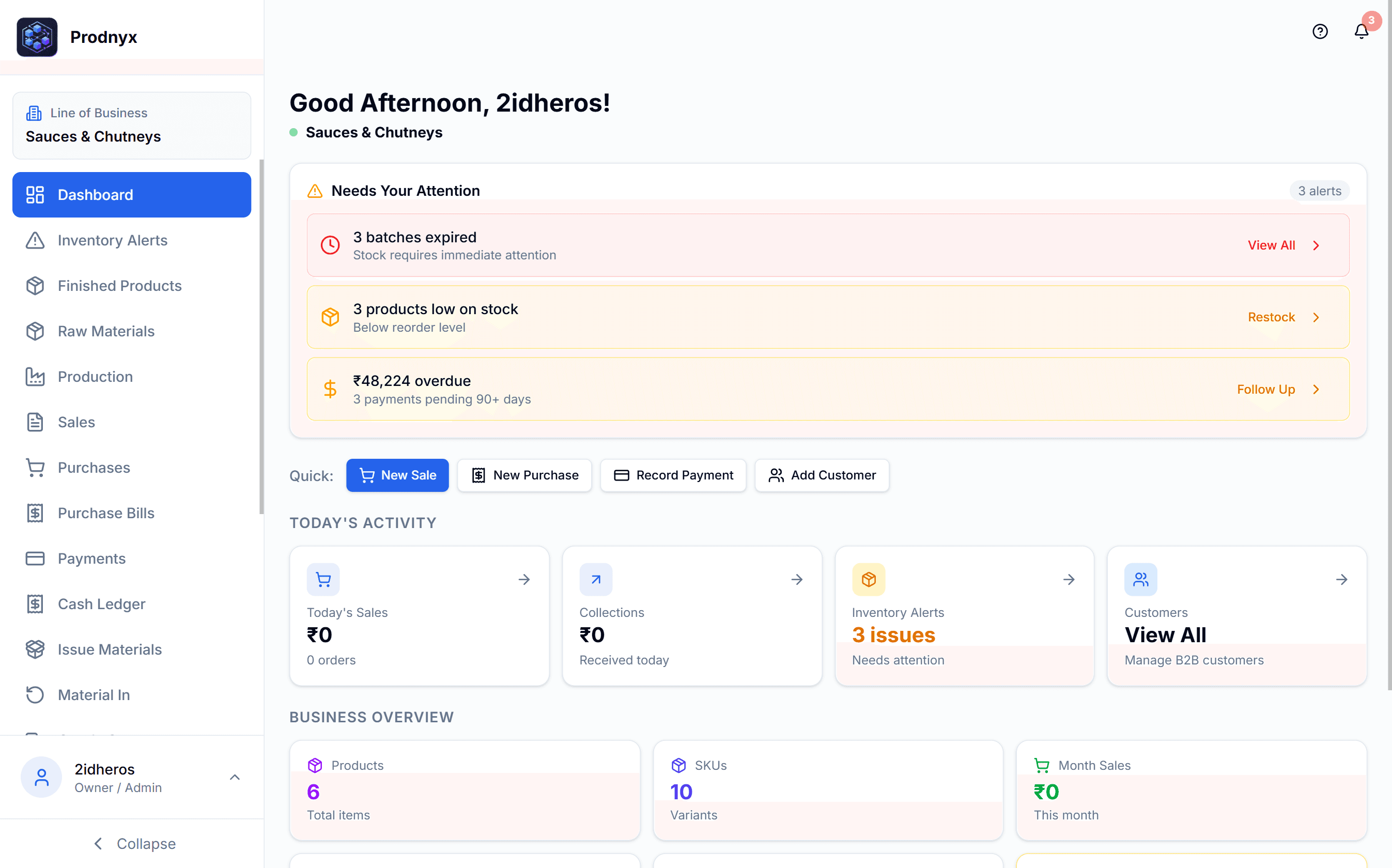
This is the model Prodnyx is built around: strict ledger-based inventory with automated FEFO batch management and expiry alerts, so the floor always reaches for the right batch without anyone having to remember the dates.
A finance head we work with described the impact simply: FEFO batch management virtually eliminated material-expiry wastage, and their purchase and sales accounting finally reconciled cleanly.
So which should your factory use?
- No expiry dates? FIFO is fine — keep it simple.
- Anything perishable, dated, or regulated? Use FEFO, and automate it with batch traceability so it actually gets followed under pressure.
The deciding question isn't really "FEFO vs FIFO" — it's "does my stock expire?" If the answer is yes, FEFO with proper batch tracking is the method that protects your margin.
Want to see automated FEFO and batch traceability in action? Take a look at Prodnyx or book a demo.
Frequently asked questions
- What does FEFO stand for?
- FEFO stands for First-Expired-First-Out. It is an inventory method where the stock with the nearest expiry date is issued or sold first, regardless of when it was received.
- What is the difference between FEFO and FIFO?
- FIFO (First-In-First-Out) issues the oldest stock first based on the date it arrived. FEFO (First-Expired-First-Out) issues stock based on the earliest expiry date. They often produce the same order, but they diverge whenever a newer batch expires sooner than an older one — and that is exactly when expiry wastage happens.
- Which industries need FEFO?
- Any business handling perishable or dated stock: food and beverage, pharmaceuticals, cosmetics, chemicals, and many specialty manufacturers. If your materials carry an expiry or best-before date, FEFO protects you in ways FIFO cannot.
- Can FEFO be automated?
- Yes. With batch-level tracking, factory management software can automatically recommend or enforce issuing the nearest-expiry batch first and alert you before stock expires — removing the manual guesswork entirely.
Ready to launch fast and scale smart?
Kaelix Technologies builds rapid, AI-powered software for growing businesses. Tell us your workflow and we'll show you what's possible.