Queue Management System Cost: What You'll Actually Pay
Queue system pricing decoded — software subscriptions vs kiosk hardware, what drives cost up, and how small businesses get tokens and displays for almost nothing.
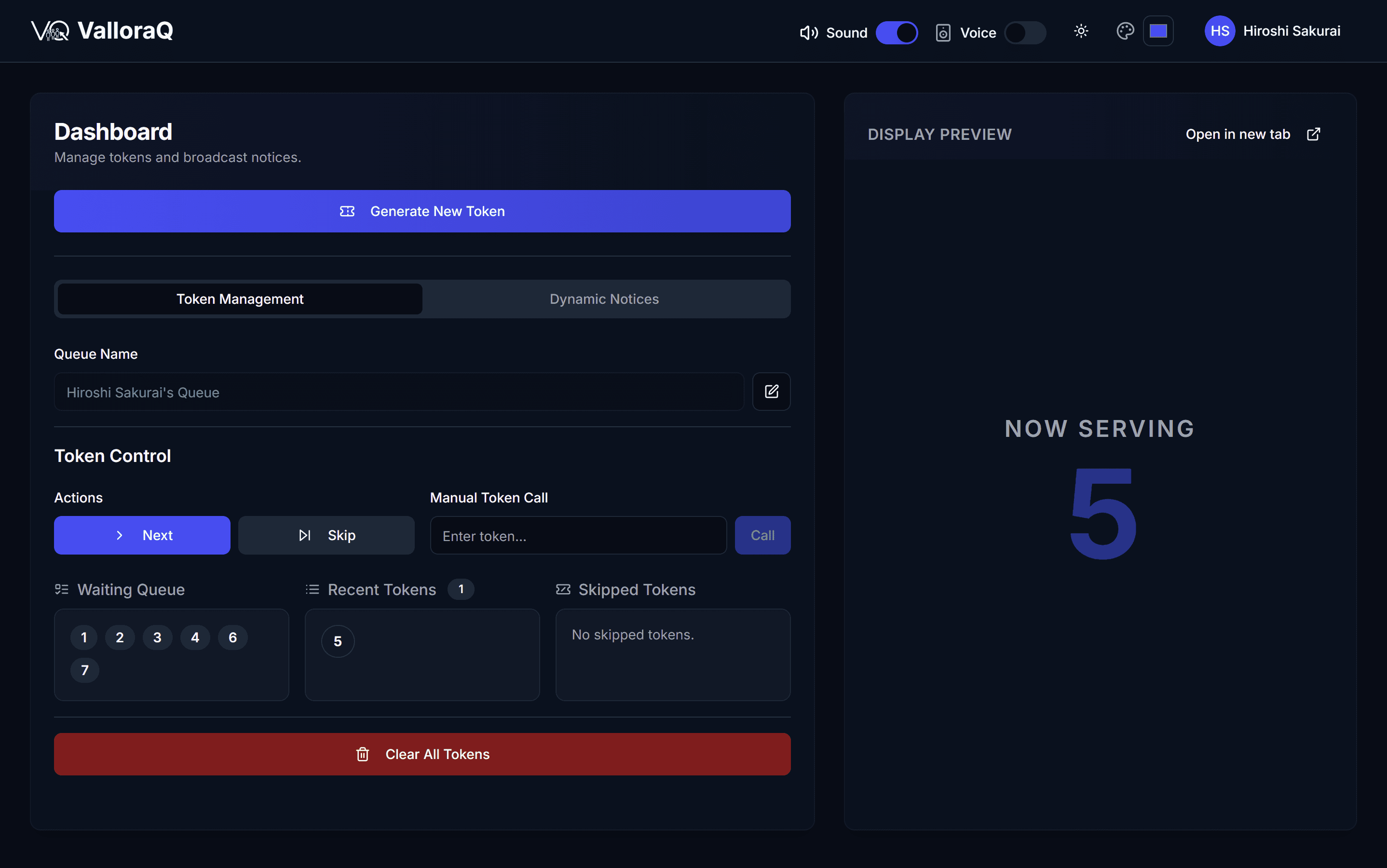
Ask "how much does a queue management system cost?" and you'll get answers spanning three orders of magnitude — from a modest monthly subscription to a multi-lakh installation quote. Both answers are real. They just describe two different generations of product, and knowing which one you actually need is where all the money is.
Here's the honest breakdown.
The two pricing worlds
World 1: hardware-centric systems. The traditional model — ticket kiosks, thermal token printers, proprietary display controllers, counter units, and installation. This is what banks and government offices bought for two decades, and what enterprise vendors still sell. Typical all-in cost: lakhs of rupees per site (thousands to tens of thousands of dollars), plus annual maintenance contracts.
World 2: software-first systems. The modern model — the queue lives in the cloud, tokens are issued from a browser, the waiting-area display is an app running on any TV or PC you already own, and announcements come from the display's speakers. Cost: a per-location subscription, usually monthly or annual, with hardware spend of zero if you have a screen and a computer (most businesses do).
The functional difference for a clinic, lab, or service center? Usually none that customers can see. The token gets issued, the screen shows the queue, the voice calls the number. The kiosk mainly adds self-service ticket printing — nice at a 40-counter passport office, irrelevant in a 30-seat waiting room.
What actually drives the price
Whichever world you buy from, four levers move the number:
1. Hardware requirements (the big one)
Every proprietary device — kiosk, printer, controller, "certified" display — adds capital cost, installation cost, and a maintenance contract. This lever alone explains most of the gap between worlds. Before any demo, ask the one-line question: "What must I buy from you to go live?" The best modern answer is nothing.
2. Counters, departments, and locations
More counters and sites mean higher subscription tiers (software world) or more hardware units (hardware world). Software scales gently here; hardware scales linearly and painfully. A three-doctor clinic and a three-branch chain should get meaningfully different quotes — make sure yours reflects your actual size, not the vendor's favorite tier.
3. Integrations
Connecting the queue to appointment booking, patient records, or CRMs adds value and sometimes cost. Buy integrations you'll use this quarter, not a platform fee for possibilities. (Clinics: queue + records + billing as one flow is the high-value combo — see streamlining OPD operations.)
4. Support and onboarding
Enterprise vendors bundle on-site installation and training days into the price. Software-first systems onboard remotely in hours. Neither is wrong — but pay for the one that matches your reality, and check support actually operates in your time zone and language.
A realistic budget picture
| Setup | Typical spend | Best for |
|---|---|---|
| Software-first, using existing PC + TV | Subscription only — entry SMB pricing | Clinics, labs, single service centers |
| Software-first + one new TV & PC | Subscription + ~₹25–50k one-time | New setups without spare hardware |
| Hardware system, single site | Lakhs, plus AMC | Sites requiring self-serve kiosks |
| Enterprise multi-branch platform | Custom (six figures USD common) | Banks, telcos, government networks |
The pattern is hard to miss: for a small or mid-size business, the subscription is the entire recurring cost, and it's small — the honest benchmark is that a month of queue software costs less than a single day of one employee's salary, while saving reception one to two hours every day of queue-policing and "how many more?" answers.
The ROI nobody puts in brochures
The visible return is an organized waiting room. The measurable returns are better:
- Freed staff time — reception stops being a human queue-referee.
- More served per session — live counter balancing shortens dead time between customers.
- Fewer walk-aways — visible, fair queues keep peak-hour customers from abandoning (the psychology is real).
- Data — wait and service times per counter per hour, which turn staffing debates into decisions.
For most clinics and service centers, that stack pays back the subscription within weeks.
Where ValloraQ lands
ValloraQ, our queue management system, is built deliberately in the software-first world: digital tokens from any browser, AI voice announcements, a display app for any Windows PC or TV, multi-counter routing, and live analytics — priced per location for Indian small and mid-size businesses, with no proprietary hardware to buy, ever. Contact us for a quote and a live demo; if you're comparing the field first, our comparison of queue systems in India names the alternatives honestly.
Budget question answered, the decision usually simplifies to this: if you don't need kiosks, don't pay for the world that sells them.
Frequently asked questions
- How much does a queue management system cost?
- Software-first systems are priced as a per-location subscription — typically an affordable monthly or annual fee — and run on PCs and TVs you already own. Traditional hardware systems with kiosks, token printers, and proprietary displays cost far more: commonly lakhs of rupees (thousands of dollars) per site once installation is included.
- What drives the cost of a queue system up?
- Four things: proprietary hardware (kiosks, printers, controllers), the number of counters and locations, enterprise integrations (appointment systems, CRMs, signage), and on-site installation and maintenance contracts. Removing the hardware requirement removes most of the bill.
- Is there a free way to manage queues digitally?
- You can improvise with numbered slips and a whiteboard, but digital benefits — voice calls, live displays, analytics — need software. Entry-level subscriptions for software-first systems cost less per month than a single day of one employee's time, which is usually the honest comparison.
- What's the ROI of a queue management system?
- The measurable returns: reception time freed from queue-policing (often 1-2 staff-hours daily), more customers served per session by balancing counters, and fewer walk-aways during peak hours. For most clinics and service centers the subscription pays back within the first month or two.
Ready to launch fast and scale smart?
Kaelix Technologies builds rapid, AI-powered software for growing businesses. Tell us your workflow and we'll show you what's possible.